
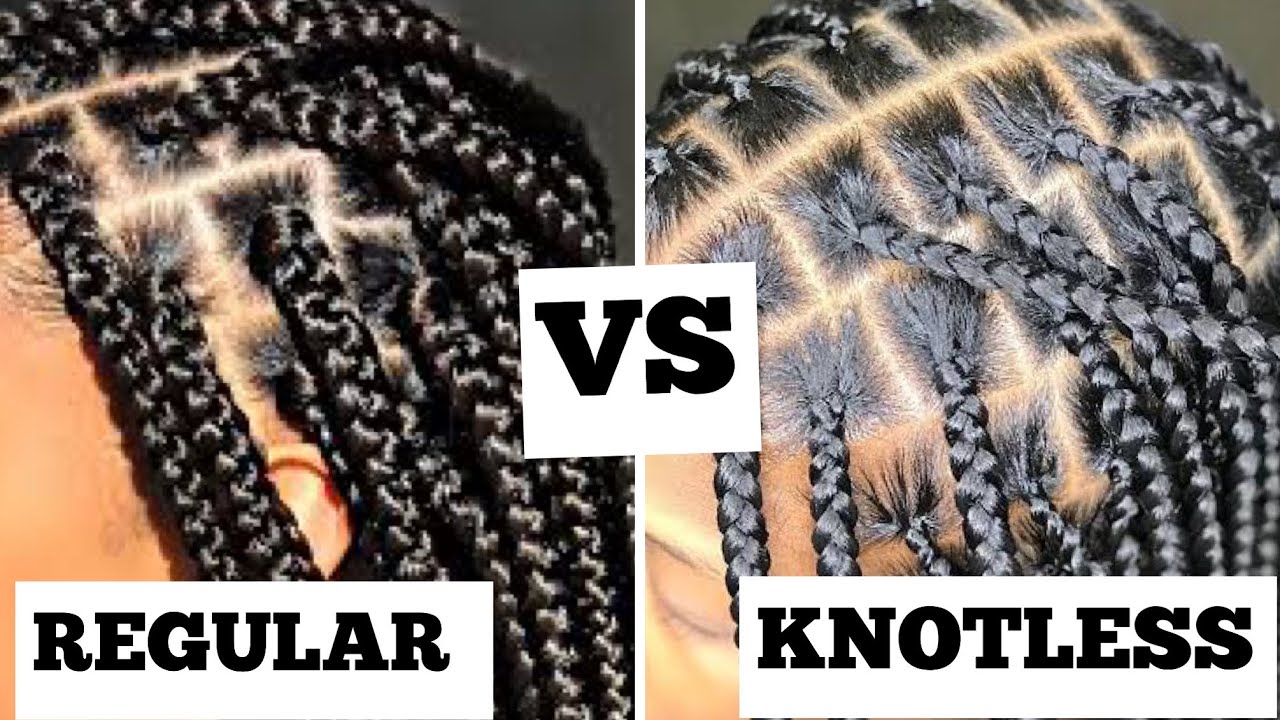
Choosing the right protective hairstyle can make a significant difference in comfort, appearance, and hair health. Two of the most popular options today are knotless braids and box braids.
While both styles offer excellent protection, they differ in technique, feel, and maintenance. This guide breaks down everything you need to know to make the best choice.
What Are Box Braids?
Box braids are individual braids sectioned into square or rectangular parts. Extension hair is knotted at the root before braiding downward.
Benefits of Box Braids:
- Long-lasting
- Versatile styling
- Affordable
- Suitable for most hair types
Considerations:
- Slightly heavier at the roots
- May cause tension if installed improperly
What Are Knotless Braids?
Knotless braids use a feed-in technique that gradually adds hair without creating a knot at the root.
Benefits of Knotless Braids:
- Lightweight feel
- Natural hairline appearance
- Less tension on the scalp
- Comfortable for sensitive edges
Considerations:
- Longer installation time
- Slightly higher cost
Key Differences Between Knotless and Box Braids
| Feature | Box Braids | Knotless Braids |
|---|---|---|
| Tension | Moderate | Low |
| Weight | Heavier | Lightweight |
| Look | Defined roots | Natural roots |
| Comfort | Moderate | High |
| Installation Time | Faster | Longer |
Which Style Is Best for You?
Choose box braids if:
- You want a classic style
- You prefer durability
- You are on a budget
Choose knotless braids if:
- You have a sensitive scalp
- You want a natural hairline
- Comfort is your priority
Why Professional Installation Matters
Improper braiding can cause:
- Hair breakage
- Traction alopecia
- Scalp irritation
Professional African braiders understand how to balance style and hair health.
Book Knotless or Box Braids in Newark, Delaware
At Heritage African Hair Braiding, we help clients choose the best style based on hair condition and lifestyle.
No responses yet